Harry Mayer
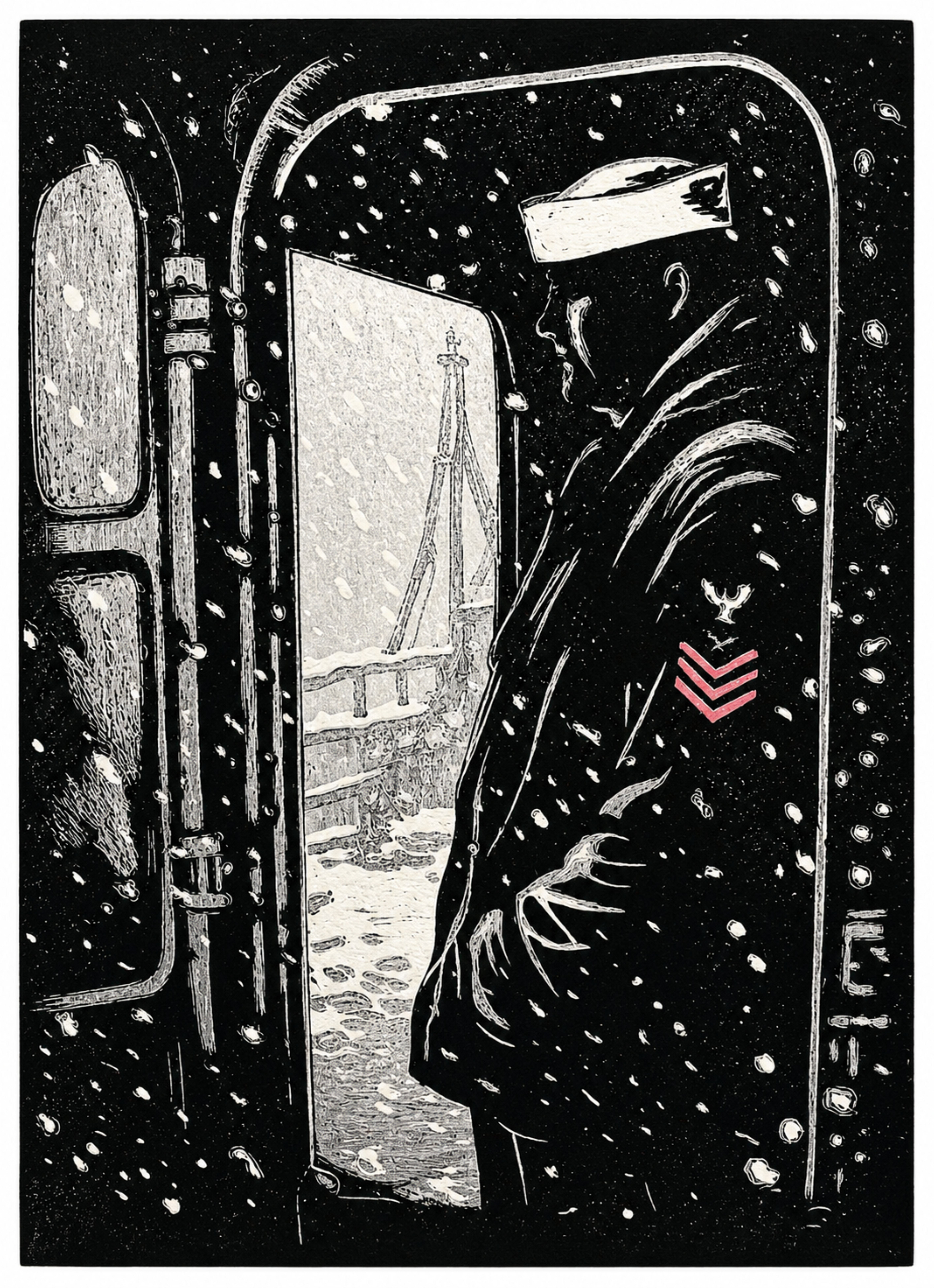
Ensign Hank Mathews slushed his way through an early March blizzard on Newport’s Pier Four. Wet snow erased his footprints almost as quickly as he made them. Even through water-spotted glasses he could see the weather decks of the frigate tied up nearby were deserted. Usually the pier bustled with maintenance crews and working parties, but not today. The only sailor topside stood watch near the quarterdeck, collar turned high against the storm.
A prolonged blast followed by a short blast echoed across Narragansett Bay. Somewhere beyond the snow, a ship at anchor warned passing traffic of her position.
Ahead, the outline of USS RESOLVE slowly emerged through the whiteout.
The aging wooden minesweeper rolled heavily against her mooring lines while the Nor’easter shoved her wherever it pleased. Hank turned his collar up as a wave exploded against the pier, soaking him with icy spray.
The ship surged away from the wharf, mooring lines stretched tight, then snapped back hard enough to shake the pilings.
When Hank stepped aboard, Boatswain’s Mate First Class Silva returned his salute.
“Mornin’, sir,” Silva said through chattering teeth. “She’s bangin’ the hell outta the pier.”
Silva came from a New Bedford fishing family and carried himself more like a scalloper captain than a sailor. RESOLVE trusted him with minesweeping gear because he understood heavy seas better than most officers.
“Mr. Clute’s waiting for you in the wardroom,” Silva added.
Inside, the warmth smelled of coffee, bacon, and diesel fuel.
Lieutenant (jg) Doug Clute sat alone in grease-stained coveralls stabbing at scrambled eggs while RESOLVE slammed against the pier again hard enough to slosh coffee across the table.
“You’re late,” Clute said.
“Roads were nearly closed.”
“You still relieved the watch late.”
Hank ignored the jab and poured coffee.
“The XO’s stranded in Charleston,” Clute continued. “Flights are canceled. We leave for Halifax Monday if the storm doesn’t tear the ship apart first.”
“What’s broken now?”
“The number two diesel still leaks oil. Chief Edwards patched it with more Balzona.”
Hank laughed softly. “That epoxy’s the only thing holding this ship together.”
Clute did not smile.
Ever since his divorce, the engineer seemed angry at everyone aboard RESOLVE. He spent most nights on the ship and worked his sailors until exhaustion.
After a tense turnover, Clute finally left for Boston, tires hissing through slush as he drove down the pier.
Hank picked up the sound-powered phone.
“Silva, double up all mooring lines. Keep knocking ice off the rigging.”
“Aye, sir.”
After changing into a dry uniform, Hank sat in his tiny stateroom beneath a framed photograph of USS PLEDGE exploding during the Korean War. The black-and-white image showed timber, debris, and seawater blasted skyward after the minesweeper struck a mine off Wonsan. Generations of deck officers had passed the photo down as a reminder that wooden ships died violently.
The storm worsened through the afternoon.
At lunch, Hank had barely taken a bite of a hamburger when a violent crack shook the ship.
The 1MC speaker barked overhead:
“Command Duty Officer to the quarterdeck.”
Silva pointed over the side.
“Sir, we’re bustin’ up the pier.”
Two creosote pilings had snapped below the waterline. Each time RESOLVE rolled against the wharf, broken timbers punched into the hull like spears. Splintered wood floated in the boiling water between ship and pier.
“Where’s the camel?” Hank asked.
“Broke loose.”
“Call Surface Group duty officer. We need a tug. Get every fender over the side you can.”
Within minutes department heads gathered on the mess decks while the storm screamed outside.
“Chief Edwards,” Hank said, “I need the engines ready to light off. Sounding and Security takes continuous bilge readings. Duty Ops checks radar, gyro, and communications. Duty Deck prepares to single up lines.”
Chief Edwards frowned.
“Sir, we ain’t gettin’ underway, are we?”
“If the pier collapses, we may not have a choice.”
The old chief looked at him for a long moment before nodding.
“Aye, sir.”
Topside, snow whipped across the weather decks in horizontal sheets. Two sailors were throwing snowballs on the fantail.
“What the hell are you doing?” Hank shouted. “Man your stations.”
The minesweeper slammed the pier again. Timbers cracked like rifle shots.
On the bridge wing Hank stared through the storm toward the harbor entrance.
“Any word on the tug?”
“Three hours out,” Silva shouted back.
Three hours.
Hank felt the weight of the ship settle squarely onto his shoulders. The captain was ashore. The XO was stranded hundreds of miles away. Everything happening aboard RESOLVE now belonged to him.
A report came from Main Control.
“Sir, water’s rising in the bilge.”
“Start dewatering. Set Special Sea and Anchor Detail.”
The announcement echoed throughout the ship.
Moments later compressed air screamed through the engine room as the Packard diesels turned over. Then came the deep reassuring rumble of the engines catching.
Black smoke rolled from the stack.
“Chief says the Balzona patch failed,” BM3 Pullet reported. “Number two diesel’s leaking bad.”
“Secure it before it starts a fire.”
The ship shifted from shore power to ship’s power while sailors disconnected hotel services in blowing snow.
“Single up all lines,” Hank ordered.
Silva relayed the command.
The minesweeper lurched hard enough to shake the bridge windows.
Then headlights appeared through the storm.
A black Ford sedan crawled down the pier.
“The captain’s aboard,” the 1MC announced.
Relief washed through Hank so suddenly his knees nearly weakened.
Minutes later Lieutenant Commander Brown stepped onto the bridge, snow coating his shoulders.
“Mr. Mathews,” the captain said calmly, “what’s going on?”
Hank explained everything quickly—the broken pilings, flooding, tug request, engine status, and underway preparations.
When he finished, the captain remained silent.
Hank braced himself for the destruction of his career.
Finally Brown sat in the captain’s chair.
“It looks like you have everything under control,” he said. “Carry on.”
The next morning the storm had passed.
Brown called Hank into his cabin.
“You did a hell of a job yesterday,” the captain said. “A lot of officers would’ve frozen.”
Hank said nothing.
“Have you thought about staying in the Navy?”
“I was planning to get out, sir. Maybe become a commercial diver.”
Brown leaned back.
“The best divers in the world are Navy trained. If you’re serious, I can help get you to dive school.”
Hank blinked in surprise.
“Thank you, sir.”
Before dismissing him, the captain handed over a manila folder.
Inside was a recommendation for a Navy Commendation Medal.
Outstanding courage and professionalism...
Hank read the line twice.
Twenty-four hours earlier he had been certain he was finished with the Navy.
Outside his stateroom, RESOLVE groaned softly against her mooring lines while dirty snow drifted across Narragansett Bay.
Hank folded the letter carefully and slipped it back into the envelope.
Maybe he wasn’t finished with the sea after all.
A prolonged blast followed by a short blast echoed across Narragansett Bay. Somewhere beyond the snow, a ship at anchor warned passing traffic of her position.
Ahead, the outline of USS RESOLVE slowly emerged through the whiteout.
The aging wooden minesweeper rolled heavily against her mooring lines while the Nor’easter shoved her wherever it pleased. Hank turned his collar up as a wave exploded against the pier, soaking him with icy spray.
The ship surged away from the wharf, mooring lines stretched tight, then snapped back hard enough to shake the pilings.
When Hank stepped aboard, Boatswain’s Mate First Class Silva returned his salute.
“Mornin’, sir,” Silva said through chattering teeth. “She’s bangin’ the hell outta the pier.”
Silva came from a New Bedford fishing family and carried himself more like a scalloper captain than a sailor. RESOLVE trusted him with minesweeping gear because he understood heavy seas better than most officers.
“Mr. Clute’s waiting for you in the wardroom,” Silva added.
Inside, the warmth smelled of coffee, bacon, and diesel fuel.
Lieutenant (jg) Doug Clute sat alone in grease-stained coveralls stabbing at scrambled eggs while RESOLVE slammed against the pier again hard enough to slosh coffee across the table.
“You’re late,” Clute said.
“Roads were nearly closed.”
“You still relieved the watch late.”
Hank ignored the jab and poured coffee.
“The XO’s stranded in Charleston,” Clute continued. “Flights are canceled. We leave for Halifax Monday if the storm doesn’t tear the ship apart first.”
“What’s broken now?”
“The number two diesel still leaks oil. Chief Edwards patched it with more Balzona.”
Hank laughed softly. “That epoxy’s the only thing holding this ship together.”
Clute did not smile.
Ever since his divorce, the engineer seemed angry at everyone aboard RESOLVE. He spent most nights on the ship and worked his sailors until exhaustion.
After a tense turnover, Clute finally left for Boston, tires hissing through slush as he drove down the pier.
Hank picked up the sound-powered phone.
“Silva, double up all mooring lines. Keep knocking ice off the rigging.”
“Aye, sir.”
After changing into a dry uniform, Hank sat in his tiny stateroom beneath a framed photograph of USS PLEDGE exploding during the Korean War. The black-and-white image showed timber, debris, and seawater blasted skyward after the minesweeper struck a mine off Wonsan. Generations of deck officers had passed the photo down as a reminder that wooden ships died violently.
The storm worsened through the afternoon.
At lunch, Hank had barely taken a bite of a hamburger when a violent crack shook the ship.
The 1MC speaker barked overhead:
“Command Duty Officer to the quarterdeck.”
Silva pointed over the side.
“Sir, we’re bustin’ up the pier.”
Two creosote pilings had snapped below the waterline. Each time RESOLVE rolled against the wharf, broken timbers punched into the hull like spears. Splintered wood floated in the boiling water between ship and pier.
“Where’s the camel?” Hank asked.
“Broke loose.”
“Call Surface Group duty officer. We need a tug. Get every fender over the side you can.”
Within minutes department heads gathered on the mess decks while the storm screamed outside.
“Chief Edwards,” Hank said, “I need the engines ready to light off. Sounding and Security takes continuous bilge readings. Duty Ops checks radar, gyro, and communications. Duty Deck prepares to single up lines.”
Chief Edwards frowned.
“Sir, we ain’t gettin’ underway, are we?”
“If the pier collapses, we may not have a choice.”
The old chief looked at him for a long moment before nodding.
“Aye, sir.”
Topside, snow whipped across the weather decks in horizontal sheets. Two sailors were throwing snowballs on the fantail.
“What the hell are you doing?” Hank shouted. “Man your stations.”
The minesweeper slammed the pier again. Timbers cracked like rifle shots.
On the bridge wing Hank stared through the storm toward the harbor entrance.
“Any word on the tug?”
“Three hours out,” Silva shouted back.
Three hours.
Hank felt the weight of the ship settle squarely onto his shoulders. The captain was ashore. The XO was stranded hundreds of miles away. Everything happening aboard RESOLVE now belonged to him.
A report came from Main Control.
“Sir, water’s rising in the bilge.”
“Start dewatering. Set Special Sea and Anchor Detail.”
The announcement echoed throughout the ship.
Moments later compressed air screamed through the engine room as the Packard diesels turned over. Then came the deep reassuring rumble of the engines catching.
Black smoke rolled from the stack.
“Chief says the Balzona patch failed,” BM3 Pullet reported. “Number two diesel’s leaking bad.”
“Secure it before it starts a fire.”
The ship shifted from shore power to ship’s power while sailors disconnected hotel services in blowing snow.
“Single up all lines,” Hank ordered.
Silva relayed the command.
The minesweeper lurched hard enough to shake the bridge windows.
Then headlights appeared through the storm.
A black Ford sedan crawled down the pier.
“The captain’s aboard,” the 1MC announced.
Relief washed through Hank so suddenly his knees nearly weakened.
Minutes later Lieutenant Commander Brown stepped onto the bridge, snow coating his shoulders.
“Mr. Mathews,” the captain said calmly, “what’s going on?”
Hank explained everything quickly—the broken pilings, flooding, tug request, engine status, and underway preparations.
When he finished, the captain remained silent.
Hank braced himself for the destruction of his career.
Finally Brown sat in the captain’s chair.
“It looks like you have everything under control,” he said. “Carry on.”
The next morning the storm had passed.
Brown called Hank into his cabin.
“You did a hell of a job yesterday,” the captain said. “A lot of officers would’ve frozen.”
Hank said nothing.
“Have you thought about staying in the Navy?”
“I was planning to get out, sir. Maybe become a commercial diver.”
Brown leaned back.
“The best divers in the world are Navy trained. If you’re serious, I can help get you to dive school.”
Hank blinked in surprise.
“Thank you, sir.”
Before dismissing him, the captain handed over a manila folder.
Inside was a recommendation for a Navy Commendation Medal.
Outstanding courage and professionalism...
Hank read the line twice.
Twenty-four hours earlier he had been certain he was finished with the Navy.
Outside his stateroom, RESOLVE groaned softly against her mooring lines while dirty snow drifted across Narragansett Bay.
Hank folded the letter carefully and slipped it back into the envelope.
Maybe he wasn’t finished with the sea after all.
Disclaimer: This work is autobiographical fiction inspired by real events. Certain characters, conversations, timelines, and incidents have been fictionalized or composited for narrative purposes.