A story of humanity and compassion in the aftermath of the Bam earthquake.
Peace Be Upon Him
Harry Mayer
I thought the desert was supposed to be hot, but it was cold, and I was freezing. A few days earlier, I had come down with an upper respiratory infection. Nothing helped. I shivered and coughed on the hard tent floor while the rocky ground sucked the heat out of me with vampire-like cruelty. My sleeping bag had been stolen from the airhead. I was cold, sick, and filthy.
There were no showers, no running water. Ordinarily, I would have felt self-conscious, but we all smelled terrible. It had been a week since anyone had showered. I shared a Western Shelter with thirty doctors, nurses, and paramedics. We huddled together on the tent floor trying to stay warm. There were no cots or heaters for the staff. Those were reserved for the patients. We had already left half our supplies behind because everything would not fit aboard a single C-5.
Unable to sleep, I checked my watch. Sunrise was still an hour away. This was not how I had planned to spend my Christmas vacation.
Back home it was evening. Jerelyn was probably putting the kids to bed, then picking up Legos and puzzle pieces scattered across the living room floor. The house was always cluttered the week after Christmas.
Careful not to step on anyone, I climbed over backpacks and sleeping bodies and slipped outside into the darkness.
My breath hung silver in the air. The sky was jet black and crowded with stars. Maybe the Magi had once traveled this way through Persia along the Silk Road, following the Christmas Star toward Bethlehem. Perhaps they had even stopped here at the ancient citadel of Arg-e Bam to buy frankincense and myrrh.
Nearby, the DRASH (deployable hospital shelter) generator rumbled in the darkness. The deployable shelter housed our field hospital. I sat beside the exhaust and rubbed my hands in the hot fumes.
Finally, I unzipped the DRASH door and stepped inside.
The heat felt good.
The field hospital was loud enough to drown out the generator. A sedated man with a scruffy beard lay on the operating table while a nurse draped his lower body in blue surgical sheets and painted his crushed foot with Betadine. His big toe was black and swollen. It would have to come off.
A surgeon wearing a gray T-shirt and BDU trousers pulled a disposable gown over his clothes, spun his ball cap backward, and fastened a battery-powered headlamp across his forehead. Then he made the first incision.
The DRASH shuddered in a cold gust of desert wind.
The earth rumbled.
Another aftershock.
Someone screamed.
An exhausted nurse steadied herself and continued ventilating a toddler, gently squeezing an Ambu bag over the child’s face. Bloody gauze and surgical drapes littered the floor while another nurse gathered them into a biohazard bag.
I moved into the waiting area.
Several people sat quietly beneath fluorescent lights. They were bruised, bloody, and hollow-eyed. A pregnant woman wearing a hijab sat beside her mother, whose black cloak was coated in gray dust.
Then the woman’s water broke.
“Komak! Nozad dare miyad!” her mother shouted. Hurry, the baby is coming.
A nurse rushed over with two paramedics and wheeled the woman into treatment.
By dawn I had warmed enough to venture back outside. I dug through an open box of MREs. Only Vegetable Lasagna and Beef Stew remained.
If I had been home for Christmas, we would have been eating pancakes.
The only things pancaked here were buildings.
I chose the lasagna.
As the sun rose, guard towers appeared against the barren mountains. An Iranian Revolutionary Guard soldier stood watch with an AK-47 across his chest. We were not prisoners, but we could not leave either. The Iranians had confiscated our passports upon arrival.
The day after Christmas, a 6.6 magnitude earthquake destroyed the region around Bam. Thousands were crushed in their sleep. Hospitals collapsed alongside homes and apartment blocks. More than 26,000 people were dead. Tens of thousands were injured. Over 100,000 were homeless.
The ancient mud-brick citadel of Arg-e Bam had collapsed like Jericho.
When the Iranian government issued an international plea for assistance, President Bush offered aid. A day later, I was aboard a C-5 headed for the desert with the International Medical Surgical Team, part of the National Disaster Medical System.
A stray dog lingered near the orange storm fence surrounding our camp. It stared at my crackers until I finally tossed one over. The dog snatched it and disappeared.
Next door stood a Ukrainian Army field hospital. Beyond it, a faded mural of Ayatollah Khomeini stared down from a nearby wall with fierce, watchful eyes.
Darius emerged from the DRASH rubbing his face. He was an Iranian American college student who had volunteered as an interpreter after learning his family lived near the quake zone.
“You been up all night?” I asked.
“Yeah,” he said, yawning. “It’s been busy. Did you feel that aftershock?”
“Oh yeah. I was inside the DRASH. They’re still ventilating the toddler?”
“Round the clock.”
“What’s the prognosis?”
Darius shrugged.
Then he added quietly, “Hardliners protested again last night. They’re angry the Great Satan is here.”
I asked about his family.
“They survived,” he said. “But the neighbors didn’t. Two little girls froze to death after their parents were killed when the house collapsed.”
An ambulance arrived before either of us spoke again.
Two Red Crescent workers carried a dehydrated man inside on a stretcher. Debbie, one of the nurses, rushed forward with a clipboard and began triage.
Later that morning, Dr. Susan returned from a UN OCHA coordination meeting. The silver-haired surgeon wore a khaki fishing vest stuffed with scalpels, forceps, and scissors.
She walked with a limp but moved with relentless energy.
“Be prepared for a VIP visit this afternoon,” she announced. “Senior officials, clerics, members of Parliament. The Secretary of the Iranian Security Council will be here.”
Then she paused.
“Oh—and Happy New Year.”
I had completely lost track of time.
That afternoon, a convoy of dust-covered vehicles rolled into camp. Clerics in flowing black robes stepped from a tan Mercedes G-Class followed by government officials and a state news crew.
Mike, our public affairs officer, greeted them while Darius translated.
The tour proceeded stiffly until one of the clerics noticed a female nurse emerging from the sleeping tent without a head covering. A male paramedic followed behind her.
The delegation stopped walking.
A heated discussion broke out in Farsi.
Even without translation, we understood the problem.
The smell of burning medical waste drifted across camp from the burn pit behind the DRASH.
Then Dr. Susan emerged from surgery still wearing her stethoscope.
“She had complications,” Susan said. “We had to perform an emergency C-section.”
Darius translated.
“It’s a boy,” she continued, smiling. “Mother and child are both doing fine.”
The clerics followed her into the recovery ward.
Inside, every bed was occupied.
Secretary Hassan Rouhani stopped beside each patient to pray.
Then the newborn cried.
The child lay wrapped in a white blanket inside a cardboard box lined with surgical drapes.
Rouhani turned toward the sound.
For the first time all day, his expression softened.
He smiled.
Then he leaned down, kissed the baby’s forehead, and whispered a prayer.
That evening, exhausted and hungry, I searched through the MRE box again. Now only breakfast meals remained.
Darius grabbed scrambled eggs and sat beside me.
“You know,” I told him, “my entire adult life people have said Iran is our enemy.”
He nodded but said nothing.
“I think it’s easier to hate people you don’t understand,” I said. “But the truth is we all love our children. We all mourn our dead. Maybe we’re not as different as we pretend to be.”
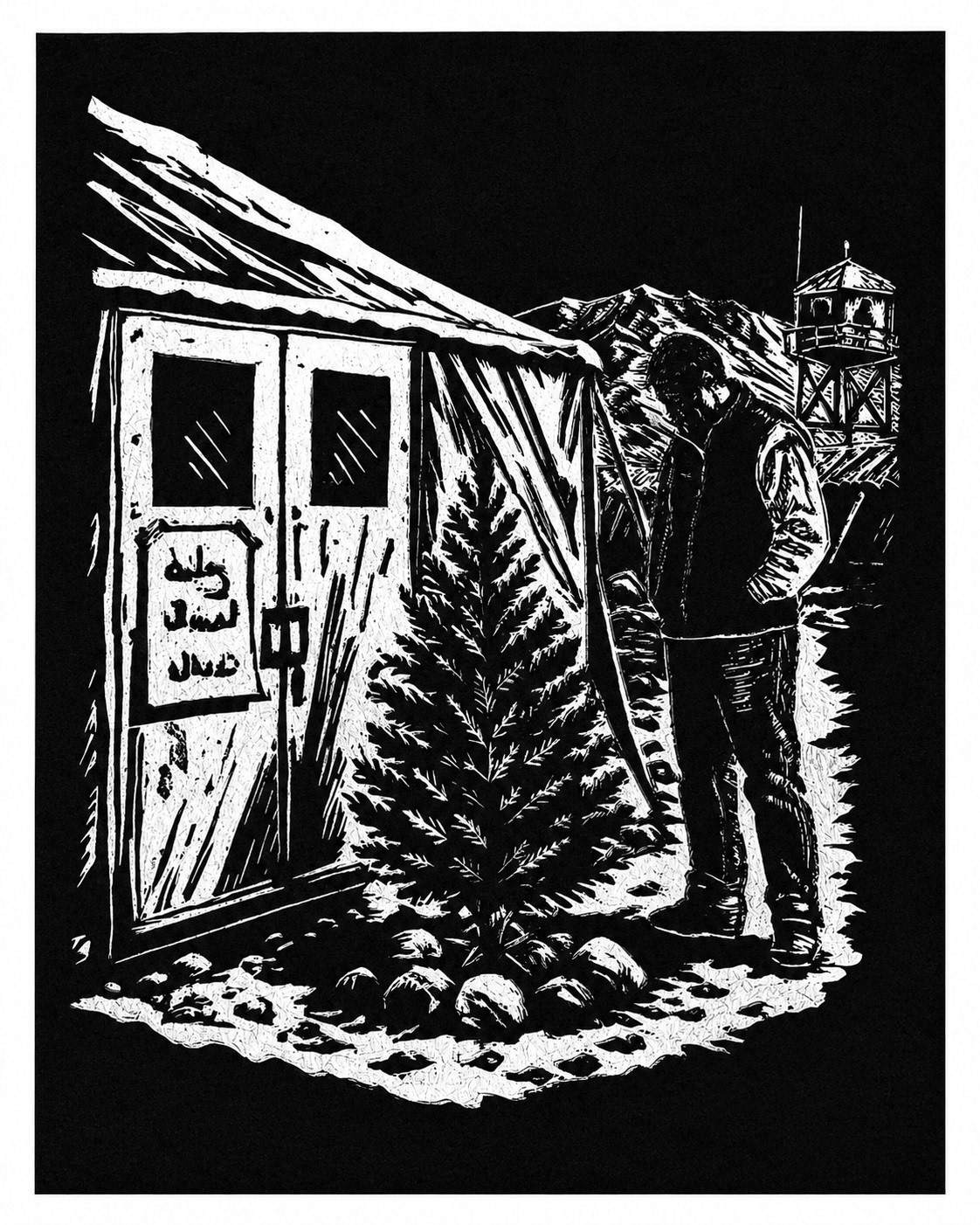
When we returned to our Western Shelter, a gift from our Iranian hosts, a Christmas tree leaned against the entrance.
Beside it sat five hundred-pound bags of pistachios and a bouquet of red flowers.
Rodney, our logistics chief, grinned.
“Merry Christmas,” he said.
I picked up the handwritten note attached to the flowers.
“In the name of God, we congratulate you on the birthday of Jesus Christ, peace be upon him. Thank you for helping the people of Bam.”
I smiled.
I could not have imagined a better way to spend Christmas.
“The sons of Adam are limbs of one another,
Having been created of one essence.
When calamity befalls one limb,
The others cannot remain at rest.”
Having been created of one essence.
When calamity befalls one limb,
The others cannot remain at rest.”
— Saadi of Shiraz
Disclaimer: Peace Be Upon Him is a work of autobiographical fiction inspired by real events, experiences, and observations from the author’s life and military service. Certain names, characters, locations, timelines, and identifying details have been changed, condensed, or fictionalized for narrative purposes and to protect the privacy of individuals. While rooted in emotional truth, portions of this story have been reimagined through the lens of fiction.