Grain Beyond Reach was inspired by an ancient Chinese parable. It is a story of humility, dependence, and the truth that survival is often a shared act rather than an individual achievement.
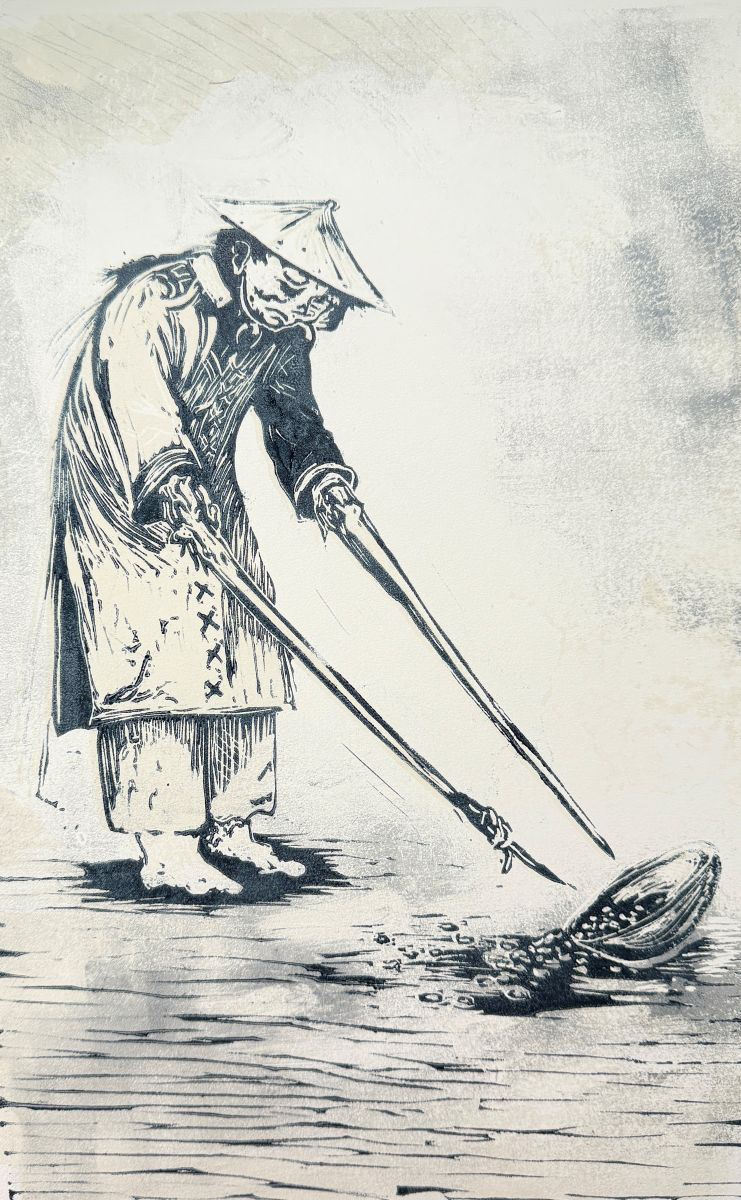
Grain Beyond Reach
Long ago, a young traveler wandered through the mountains seeking wisdom. He had studied books, listened to scholars, and prayed at temples, yet one question haunted him:
"What is the difference between Heaven and Hell?"
An old sage smiled and led him to a great hall.
Inside sat hundreds of people around tables overflowing with rice, vegetables, fish, and fruit. The air was rich with the aroma of a feast. Yet the people were gaunt, angry, and desperate. They shouted and cursed one another.
The traveler looked closer and saw why.
Each person had chopsticks fastened to their arms—long bamboo chopsticks stretching several feet beyond their fingertips. They could grasp food, but the chopsticks were too long to bring a single bite to their own mouths.
Again and again they struggled, dropping food, knocking bowls aside, and growing hungrier with every attempt.
"This," said the sage, "is Hell."
The traveler watched in silence as the starving people sat surrounded by abundance they could never enjoy.
The sage then led him to another hall.
To the traveler's surprise, everything looked exactly the same. The tables were piled high with food. The people wore the same long chopsticks attached to their arms.
But here there was laughter.
Faces were bright and healthy. Children played between the tables. Old men shared stories. No one seemed hungry.
The traveler stared in confusion.
"How can this be?" he asked.
The sage pointed to a woman who lifted a piece of fruit with her chopsticks and gently placed it into the mouth of the man across from her. The man smiled and fed the woman beside him. Around the room, everyone was doing the same.
The people could not feed themselves.
So they fed one another.
"This," said the sage, "is Heaven."
The traveler stood quietly for a long time.
At last he understood.
Heaven and Hell were not different places.
The food was the same.
The people were the same.
Even the burdens they carried were the same.
The only difference was whether they chose to live for themselves alone or to care for one another.
As the sage and traveler left the hall, the old man spoke one final lesson:
"When grain is beyond your own reach, the question is not whether you can eat. The question is whether someone beside you is willing to feed you—and whether you are willing to feed them."
And the traveler carried that wisdom with him for the rest of his life.